Might be the Best Path to AI that Truly Works!

For years, the road to AI (let’s call them Generation 1 and 2) ran mainly through universities. But with the internet boom, the third generation of AI became accessible to everyone; suddenly, knowledge was no longer locked behind academic walls.

Today, we see a flood of tutorials on YouTube and online learning platforms offering “AI in a few hours” — sometimes even “AI in minutes with no code.” But is that really possible?

State AI Made Simple

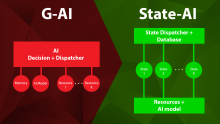
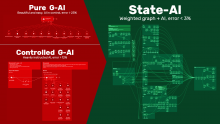
Generative AI (G-AI) is a powerful tool, but it often behaves in ways that make automation unreliable, costly, and difficult to scale. "After three months of experimentation with multiple G-AI engines, our team at DesignAndBusiness developed State AI (S-AI) — a framework designed to mitigate these problems by introducing state-driven workflow control", says Arash Kharabi, who directed the project.

Why Generative AI Fails — How State AI Delivers and Cuts Cost

Have you tried using AI to solve a problem, only to end up with unpredictable or inaccurate results? One key reason is that we often rely on generative AI (G-AI), which produces outputs that can vary significantly over time. Today’s result might differ tomorrow, even with the same input. This is the nature of G-AI — it’s dynamic, evolving, and influenced by continuous training, feedback, and platform updates.